 Spain
 Croatia
 Turkey
 Portugal
 Bosnia
 Netherlands
 Argentina
 Mexico
 Colombia
 Uruguay
 Bolivia
 Brazil
 Bangladesh
 Lebanon
 Tunisia
 Angola
 Cape Verde




We celebrate ten years of our end-of-life tire recovery plant, advancing the circular economy and decarbonization
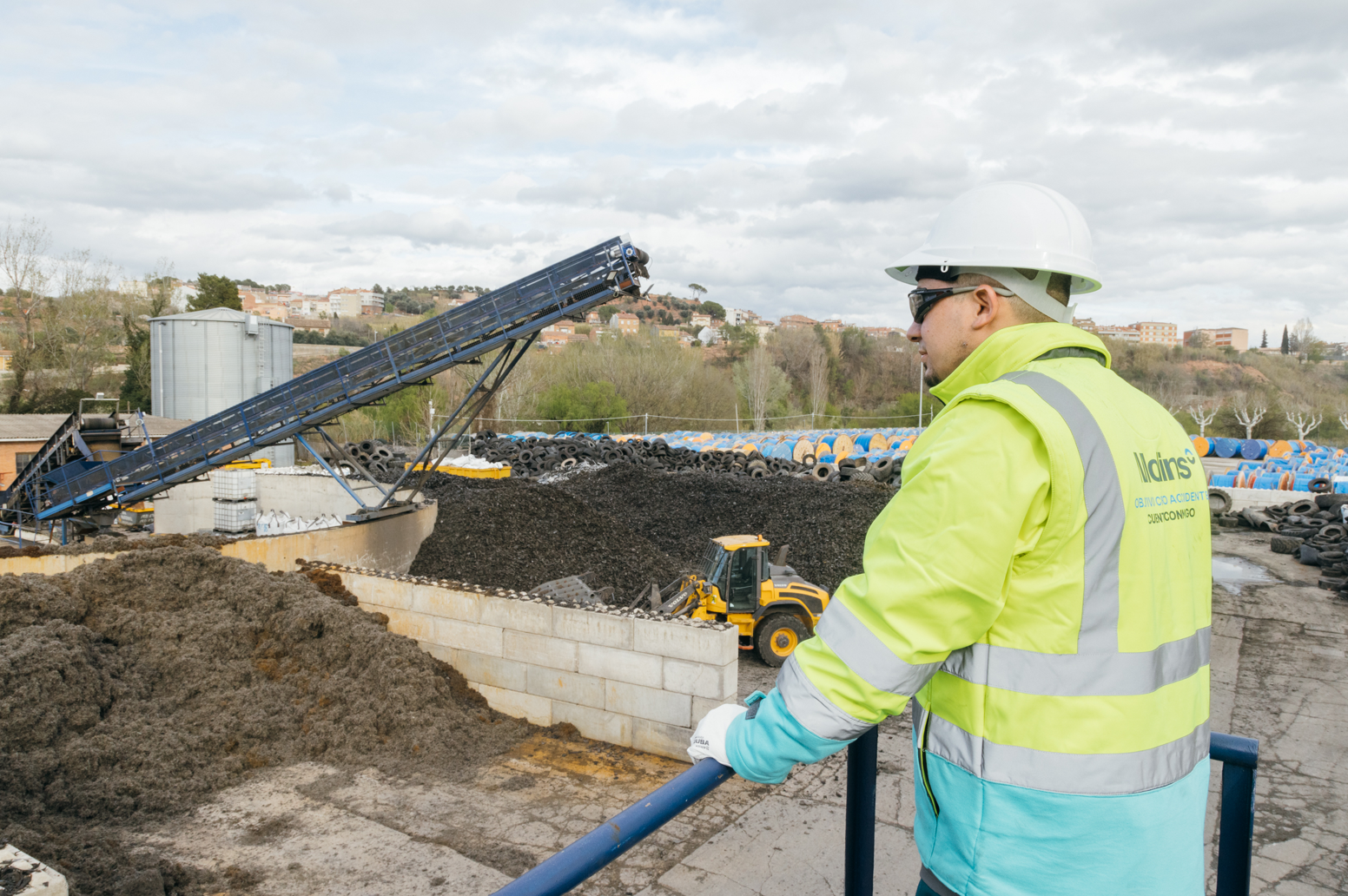
- Since it began operating in 2016, our facility has recovered 198,000 tons of end-of-life tires (ELTs), equivalent to 22 million tires, and supplied 125,000 tons of alternative fuel to our cement plant in Sant Vicenç dels Horts (Barcelona).
- The use of this waste as alternative fuel has enabled us to prevent 182,380 tons of CO₂ emissions over the past decade. As of today, our cumulative thermal substitution rate stands at 65%.
We are celebrating the tenth anniversary of our end-of-life tire (ELT) treatment and recovery plant in Manresa (Barcelona), a facility that has become a key part of our circular economy and decarbonization strategy.
Since it began operating in 2016, our plant has processed 22 million end-of-life tires and supplied a total of 125,000 tons of alternative fuel derived from end-of-life tires to our cement plant in Sant Vicenç dels Horts (Barcelona). The use of this alternative fuel has helped us reduce fossil fuel consumption in the cement manufacturing process, bringing our thermal substitution rate to 65% to date.
Furthermore, by making use of the biogenic fraction of the tires, we have avoided 182,380 tons of CO₂ emissions at our Sant Vicenç dels Horts plant over this period. This is equivalent to the annual emissions of approximately 51,000 gasoline-powered vehicles.
Ten years turning waste into resources
Our Manresa plant gives end-of-life tires a second life through a mechanical treatment process that transforms them into alternative fuel for the cement industry. This approach helps us reduce our reliance on fossil fuels while providing a recovery solution for waste that would otherwise require alternative waste management routes.
The integration of this facility into our value chain is an example of industrial symbiosis, connecting waste management with the production of construction materials and promoting more efficient use of resources.
“The tenth anniversary of this plant reflects our commitment to integrating the circular economy into our industrial processes. Over the past decade, we have demonstrated how waste recovery can help reduce fossil fuel consumption and advance the decarbonization of the cement industry,” says Pilar López, Head of Circular Economy at Molins in Spain.
Our Manresa plant is part of our wider network of circular economy facilities in Spain, specializing in the treatment and recovery of different streams of industrial and construction waste. Between 2022 and 2025, our facilities treated and recovered a total of 991,000 tons of waste, more than 248,000 tons of which were treated and recovered in 2025 alone. Through this network, we are turning waste into new resources, reducing the consumption of natural raw materials and fossil fuels, and contributing to the decarbonization targets set out in our Sustainability Roadmap 2030.
Related news
All the news
Growing without expanding: renovating the city we already have
Barcelona faces an increasingly pressing challenge: how can the city continue to develop without expanding its physical footprint? This was … Growing without expanding: renovating the city we already have

We complete the first investments through Molins Ventures, our corporate venture capital arm
We have completed the first transactions through Molins Ventures, our corporate venture capital arm, launched in March 2026, with a … We complete the first investments through Molins Ventures, our corporate venture capital arm

We’ve inaugurated our first manufacturing plant in the United States under the Escofet brand
We’ve launched a new manufacturing plant in Elk City, Oklahoma, marking our first production facility in the United States and … We’ve inaugurated our first manufacturing plant in the United States under the Escofet brand
Subscribe to corporate news
