 Spain
 Croatia
 Turkey
 Portugal
 Bosnia
 Netherlands
 Argentina
 Mexico
 Colombia
 Uruguay
 Bolivia
 Brazil
 Bangladesh
 Lebanon
 Tunisia
 Angola
 Cape Verde




Growing without expanding: renovating the city we already have
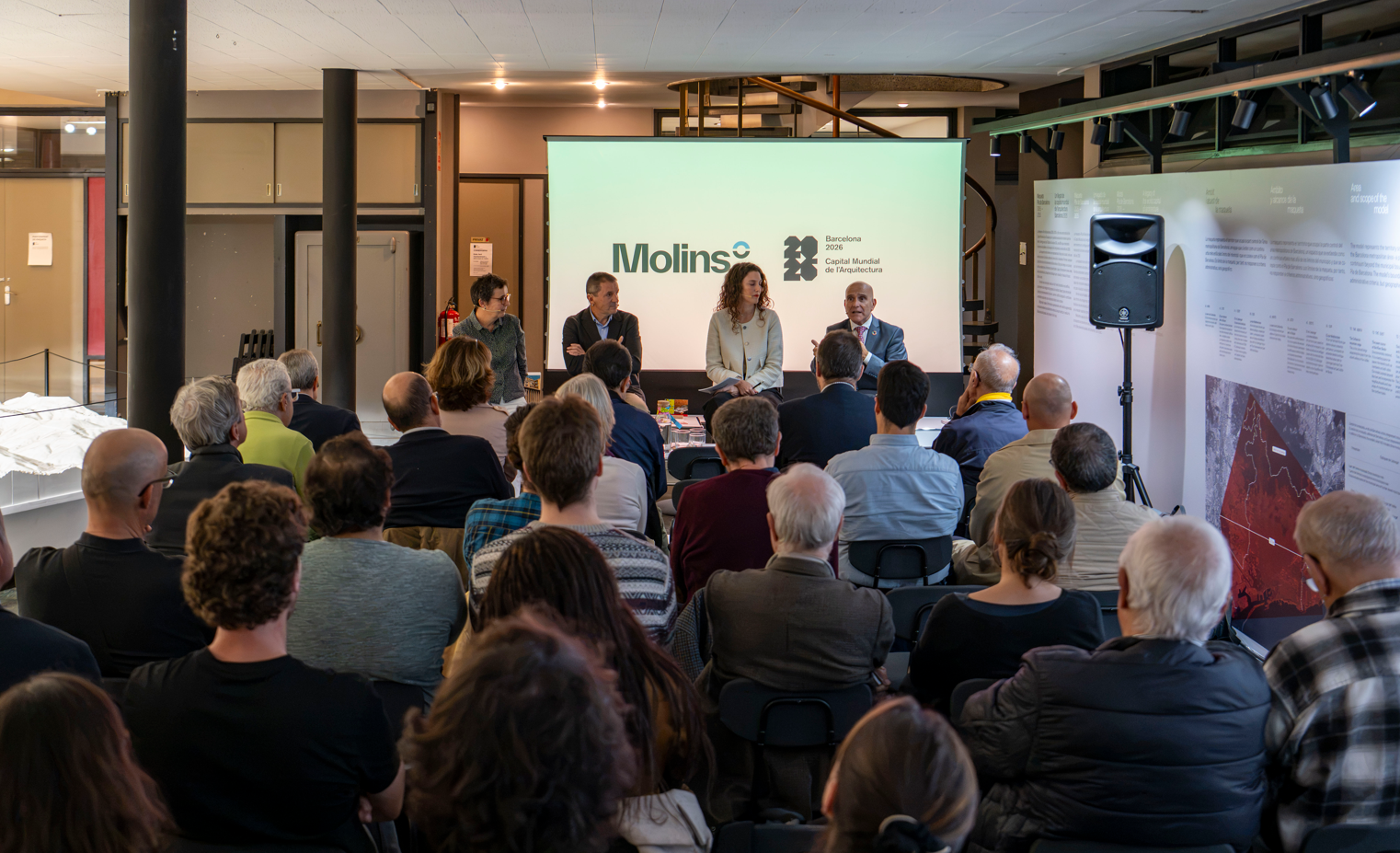
Barcelona faces an increasingly pressing challenge: how can the city continue to develop without expanding its physical footprint? This was the central theme of the third session of “Molins Talks: The Present and Future of Architecture”, our series of discussions held as part of our collaboration with Barcelona World Capital of Architecture 2026.
The session brought together Maria Buhigas, Chief Architect of Barcelona City Council; Josep Antoni Martínez Zaplana, President of the Gremi de Constructors; and Enric Heredia, President of ACE – Associació de Consultors d’Estructures. The discussion was moderated by Adela Martínez, Molins Director of Corporate Affairs and External Communications. Three complementary perspectives — urban planning, structural engineering and construction — explored what it will take for Barcelona to deliver more and better building renovation.
One of the first points of agreement was the need to focus on the city we already have. Scaling up renovation means deciding where to intervene first and which criteria to apply, from the vulnerability of residents and the condition of buildings to accessibility, climate impact and the potential to improve quality of life across neighbourhoods. It also requires a sound initial assessment to reduce uncertainty before defining the scope, cost and timeline of each project.
“Renovation is one of the main challenges facing established cities. Since it is not possible to address everything at once, we need to set priorities. We should start in areas where building defects are most evident and living conditions are most compromised, which often coincides with neighbourhoods where the most vulnerable people live. But renovation must also move forward across the rest of the city,” said Maria Buhigas, Chief Architect of Barcelona City Council.
In a city like Barcelona, renovation also means striking a particularly delicate balance: meeting the current needs of buildings and the people who live in them while preserving the value of the urban heritage. In this regard, the discussion highlighted the importance of fostering a stronger culture of building conservation and maintenance, so that deterioration can be anticipated and issues addressed before they arise. Renovation should not be seen solely as a response to existing problems, but also as a way to preserve buildings and maintain their safety, habitability and comfort over the long term.
The challenges are compounded by the uncertainty involved in working with existing structures. Hidden defects, changes in use or the need for structural reinforcement can lead to changes in a project once construction is underway. This makes thorough assessments, information sharing and early technical decision-making particularly important.
According to Enric Heredia, President of ACE – Associació de Consultors d’Estructures: “We have an ageing building stock that needs to be adapted to meet new safety, accessibility and sustainability requirements. The first step is to inspect and stabilise the structures, followed by improvements to building services and the building envelope to enhance energy efficiency and comfort. This becomes even more challenging when work has to be carried out in buildings that remain occupied by residents.”
However, even the best technical solution will only work if it is also financially viable and practical to implement. Funding, access to grants and financial incentives, administrative procedures, and coordination between homeowners’ associations, public authorities, technical professionals and construction companies are all essential to scaling up renovation.
The discussion also highlighted the need to involve citizens and homeowners’ associations more closely, provide clear information about available resources and support, and guide them through the decision-making process. This means raising awareness of the importance of maintaining and preserving buildings, while making it easier for property owners to undertake the necessary work. Guidance and technical advice are essential to help residents understand their buildings’ needs and assess the different options available.
In this context, the Existing Building Report for Renovation, was highlighted as a useful tool. It brings together information on a building’s characteristics and state of conservation, while providing guidance on potential improvements.
Josep Antoni Martínez Zaplana, President of the Gremi de Constructors, pointed out that “Property owners have a responsibility to maintain and preserve their buildings and adapt them to changing needs. It is important to see this as part of the ongoing maintenance of buildings, rather than something that only comes into play when problems arise.”
Finally, the discussion explored how industrialization, digitalization, new materials and information systems can make work on existing buildings easier. These developments offer new opportunities to improve renovation processes and address the technical, environmental and social challenges facing our cities.
Renovation is therefore a way of continuing to build our cities by extending the useful life of buildings and contributing to urban development that brings together heritage conservation, sustainability, housing and people’s quality of life.
Related news
All the news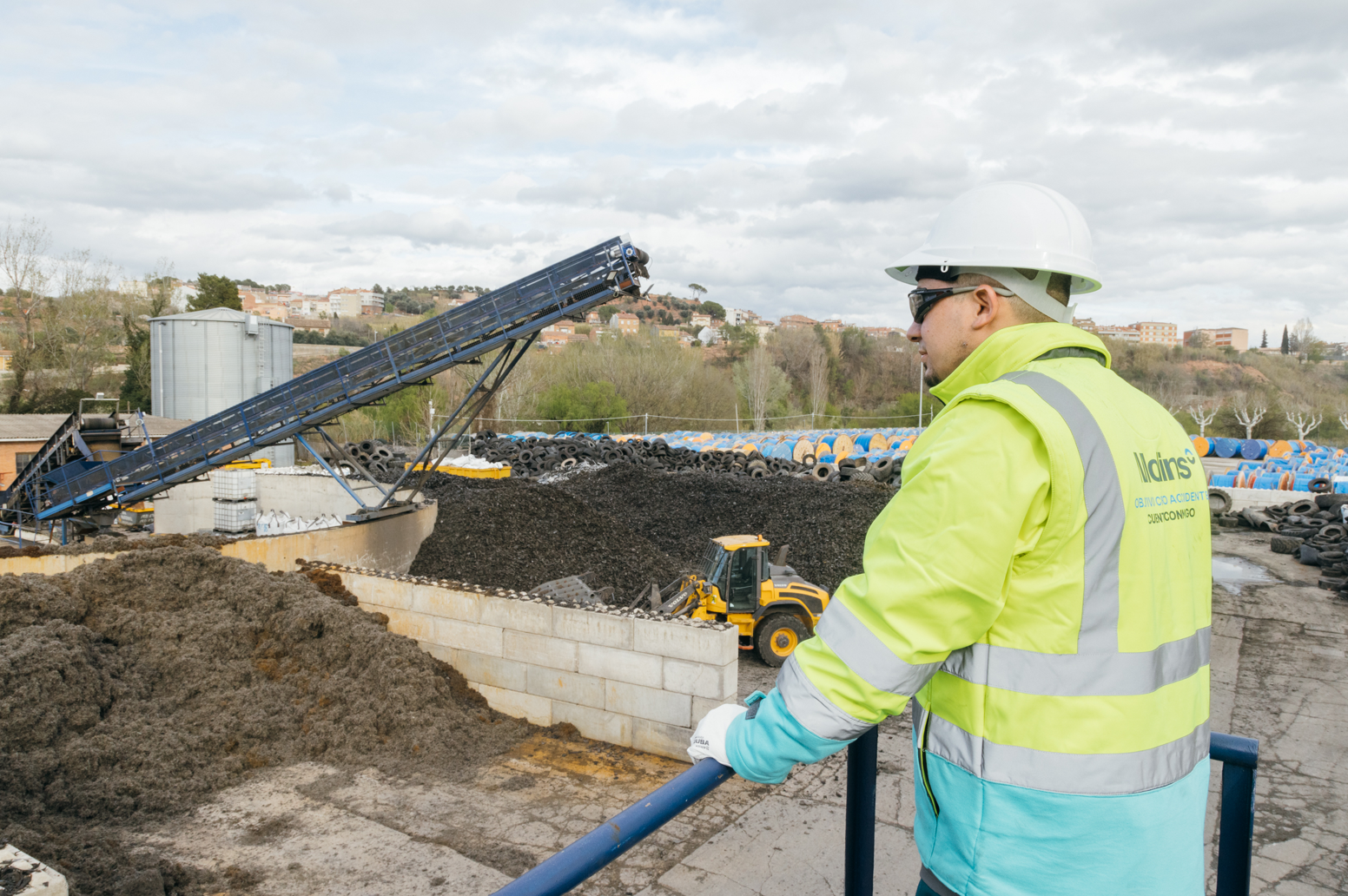
We celebrate ten years of our end-of-life tire recovery plant, advancing the circular economy and decarbonization
We are celebrating the tenth anniversary of our end-of-life tire (ELT) treatment and recovery plant in Manresa (Barcelona), a facility … We celebrate ten years of our end-of-life tire recovery plant, advancing the circular economy and decarbonization
We complete the first investments through Molins Ventures, our corporate venture capital arm
We have completed the first transactions through Molins Ventures, our corporate venture capital arm, launched in March 2026, with a … We complete the first investments through Molins Ventures, our corporate venture capital arm

We’ve inaugurated our first manufacturing plant in the United States under the Escofet brand
We’ve launched a new manufacturing plant in Elk City, Oklahoma, marking our first production facility in the United States and … We’ve inaugurated our first manufacturing plant in the United States under the Escofet brand
Subscribe to corporate news
