 Spain
 Croatia
 Turkey
 Portugal
 Bosnia
 Netherlands
 Argentina
 Mexico
 Colombia
 Uruguay
 Bolivia
 Brazil
 Bangladesh
 Lebanon
 Tunisia
 Angola
 Cape Verde
 Spain
Ten years of transforming end-of-life tyres into resources for construction
We are celebrating the tenth anniversary of our end-of-life tyre recovery plant in Manresa (Barcelona). This facility helps drive the circular economy and decarbonisation in the construction materials industry.
Our end-of-life tyre (ELT) treatment and recovery plant began operating in 2016. Since then, it has recovered 198,000 tonnes of waste, equivalent to 22 million tyres.
Through a mechanical treatment process, the facility transforms end-of-life tyres into alternative fuel for cement production. Over the past ten years, the plant has supplied 125,000 tonnes of this fuel to our cement plant in Sant Vicenç dels Horts (Barcelona).
As a result, we have helped reduce fossil fuel consumption and achieve a thermal substitution rate of 65% at the cement plant. In addition, by using the biogenic fraction of tyres, we have avoided 182,380 tonnes of CO₂ emissions over the past decade. This figure is equivalent to the annual emissions of approximately 51,000 petrol-powered vehicles.
Driving the circular economy in construction
Our Manresa plant is an example of industrial symbiosis. It connects waste management and recovery with the production of construction materials. In this way, we give waste a second life and promote a more efficient use of resources.
This facility is part of our network of circular economy plants in Spain. These plants specialise in treating and recovering different types of industrial and construction waste.
Between 2022 and 2025, these facilities treated and recovered a total of 991,000 tonnes of waste. Of this total, more than 248,000 tonnes were recovered in 2025 alone.
We share a commitment to building a more circular and sustainable construction industry. By integrating the circular economy into our value chain, we help reduce the consumption of natural resources and fossil fuels. Furthermore, we continue to make progress towards the decarbonisation targets set out in our Sustainability Roadmap 2030.
Related news
All the news
Sharing knowledge on the circular economy at an event focused on the new Spotify Camp Nou
The new Spotify Camp Nou took centre stage at a recent Molins Talks session. During the event, we discussed the … Sharing knowledge on the circular economy at an event focused on the new Spotify Camp Nou
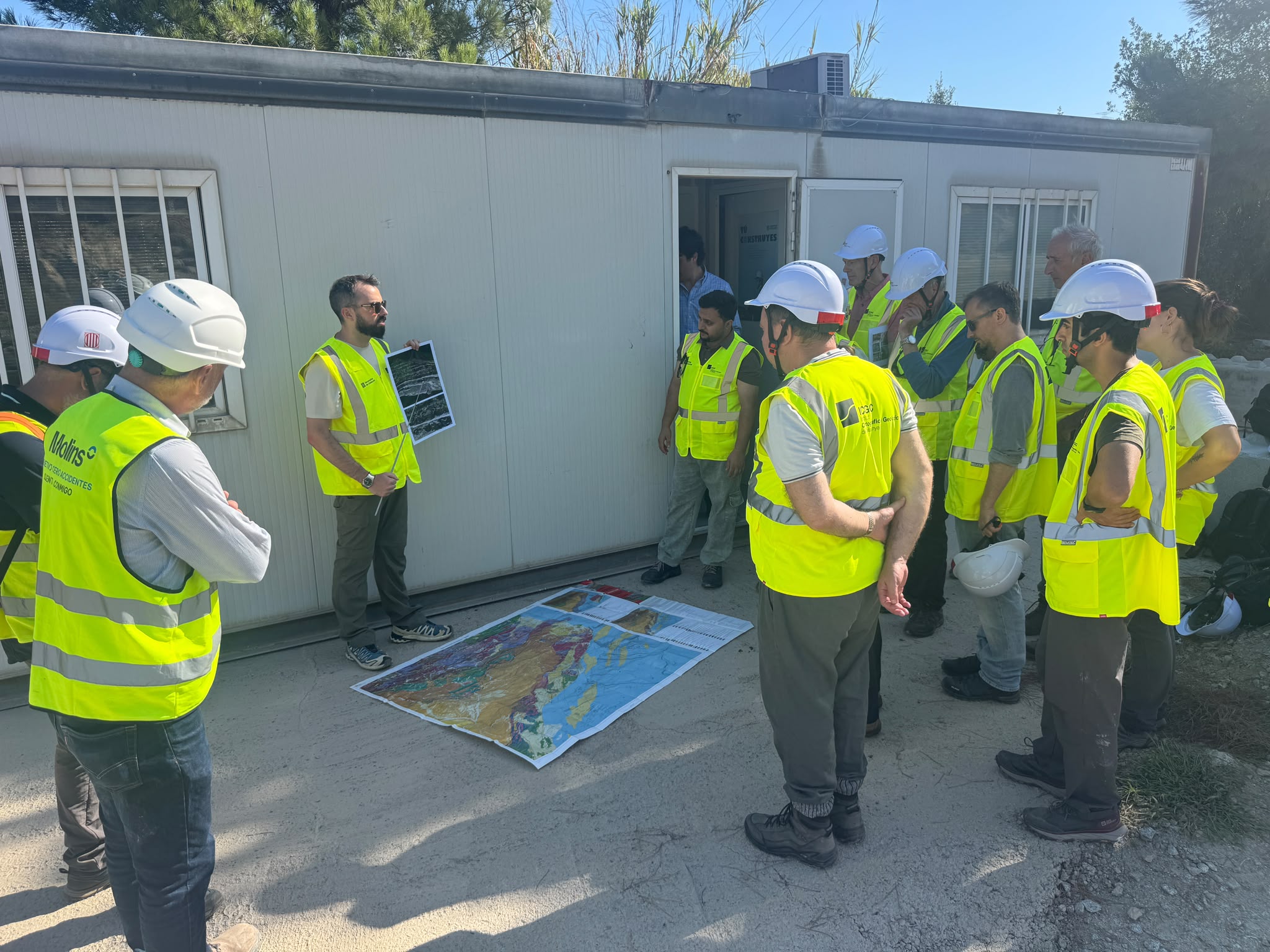
European GO-Forward project advances with new research at Molins quarries
Our Can Rovira and Ivonne quarries hosted a new working session as part of the European GO-Forward project. The event … European GO-Forward project advances with new research at Molins quarries

We add five new concrete mixer trucks to drive more efficient and sustainable concrete transport
The addition of the first units equipped with Constant Speed 2.0 technology reinforces our commitment to innovation, operational efficiency and … We add five new concrete mixer trucks to drive more efficient and sustainable concrete transport
Subscribe to Concrete and Aggregates news
