 Spain
 Croatia
 Turkey
 Portugal
 Bosnia
 Netherlands
 Argentina
 Mexico
 Colombia
 Uruguay
 Bolivia
 Brazil
 Bangladesh
 Lebanon
 Tunisia
 Angola
 Cape Verde
 Spain
European GO-Forward project advances with new research at Molins quarries
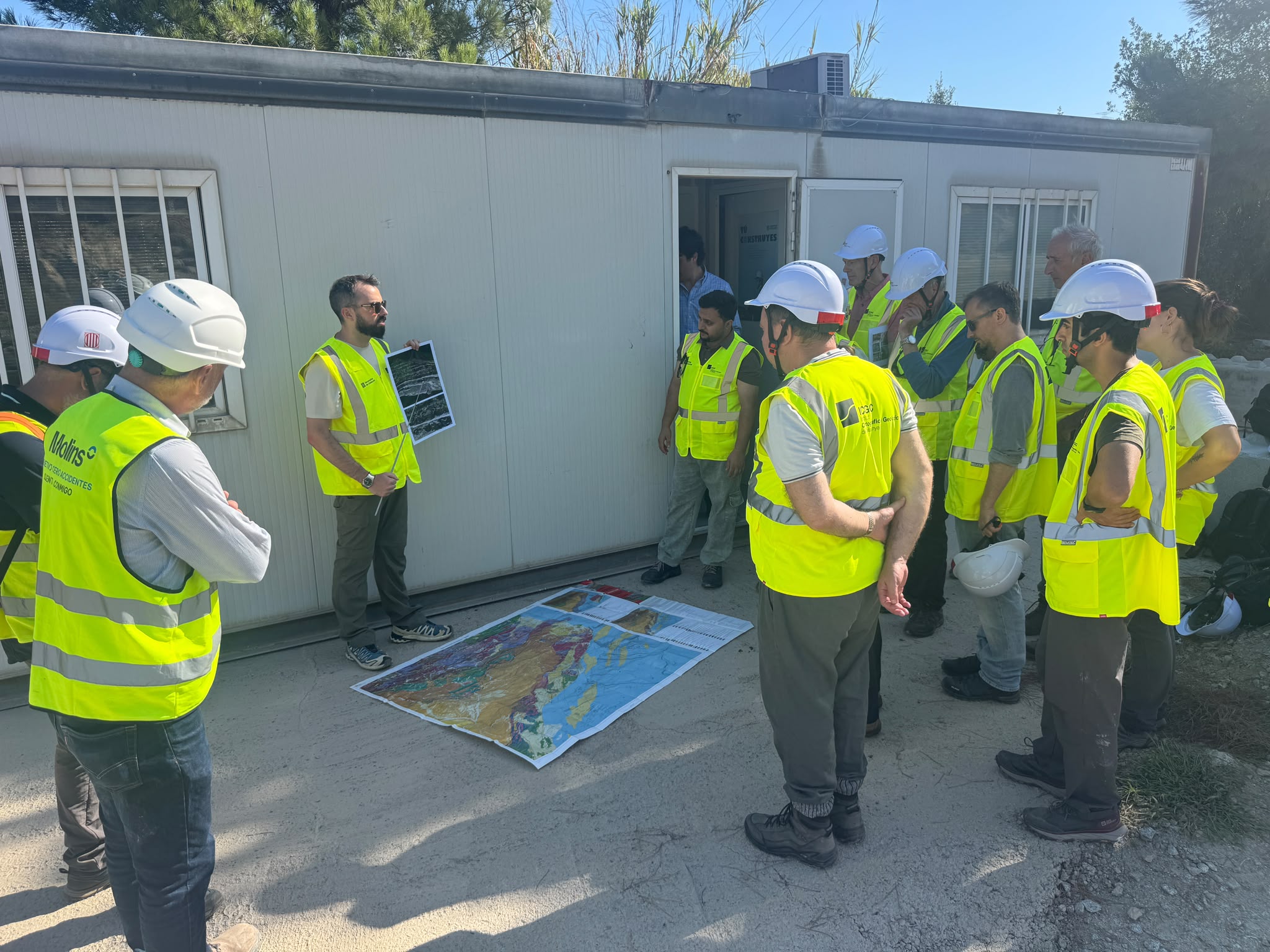
Our Can Rovira and Ivonne quarries hosted a new working session as part of the European GO-Forward project. The event brought together 17 geoenergy experts from 12 European geological institutions. The aim was to advance subsurface knowledge and explore the geothermal potential of fractured crystalline rocks.
On 15 September, we hosted a new research session as part of the European GO-Forward project. The initiative involves the Institut Cartogràfic i Geològic de Catalunya (ICGC), with Molins contributing as a collaborating partner.
The session built on previous work at our Can Rovira quarry, located in Sant Fost de Campsentelles. In addition, it introduced a new study site: our Ivonne quarry in Llinars del Vallès.
New advances in the European GO-Forward project at our quarries
Previously, the ICGC had carried out a drone-based photogrammetric mapping campaign at Can Rovira. Following this, researchers returned to the quarry to take direct measurements of rock outcrops.
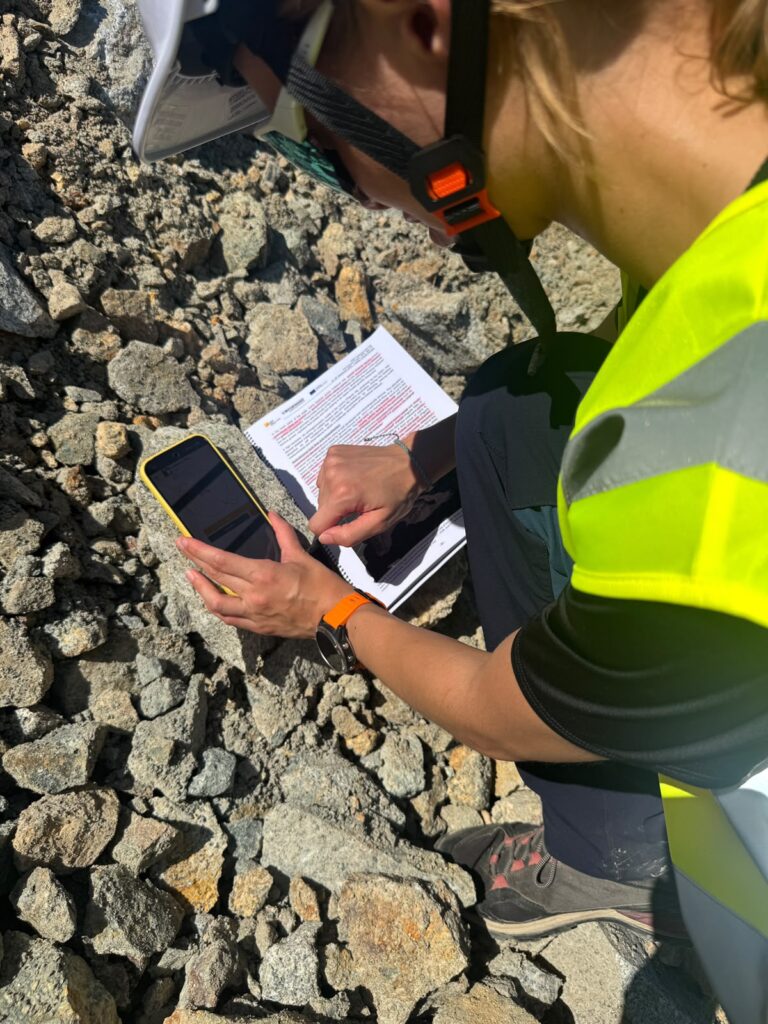
The fieldwork enabled researchers to analyse materials with varying degrees of weathering, from fresh granite to weathered granite profiles. Furthermore, the inclusion of the Ivonne quarry expanded the scope of the project.
During the session, researchers measured discontinuities and fractures in the rock. These measurements will be combined with data previously collected using drones. As a result, researchers will be able to improve subsurface characterisation and develop more accurate geological models. This will help assess the area’s geothermal potential.
Collaboration between research and industry to drive innovation
The participation of our quarries in the GO-Forward project highlights the value of industrial sites for applied research. These environments provide real-world conditions for developing and applying new geological analysis methods.
At Molins, we remain committed to collaborating with scientific and technological institutions. This cooperation promotes knowledge transfer and drives innovation. In addition, it supports the development of solutions that encourage the sustainable use of geological resources and the energy transition.
Related news
All the news
Sharing knowledge on the circular economy at an event focused on the new Spotify Camp Nou
The new Spotify Camp Nou took centre stage at a recent Molins Talks session. During the event, we discussed the … Sharing knowledge on the circular economy at an event focused on the new Spotify Camp Nou

We add five new concrete mixer trucks to drive more efficient and sustainable concrete transport
The addition of the first units equipped with Constant Speed 2.0 technology reinforces our commitment to innovation, operational efficiency and … We add five new concrete mixer trucks to drive more efficient and sustainable concrete transport

Supporting the Pedra Viva Festival to promote culture and heritage in Olesa de Bonesvalls
The Pedra Viva Festival will bring together music, cultural heritage and a wide range of cultural activities from 2 to … Supporting the Pedra Viva Festival to promote culture and heritage in Olesa de Bonesvalls
Subscribe to Concrete and Aggregates news
